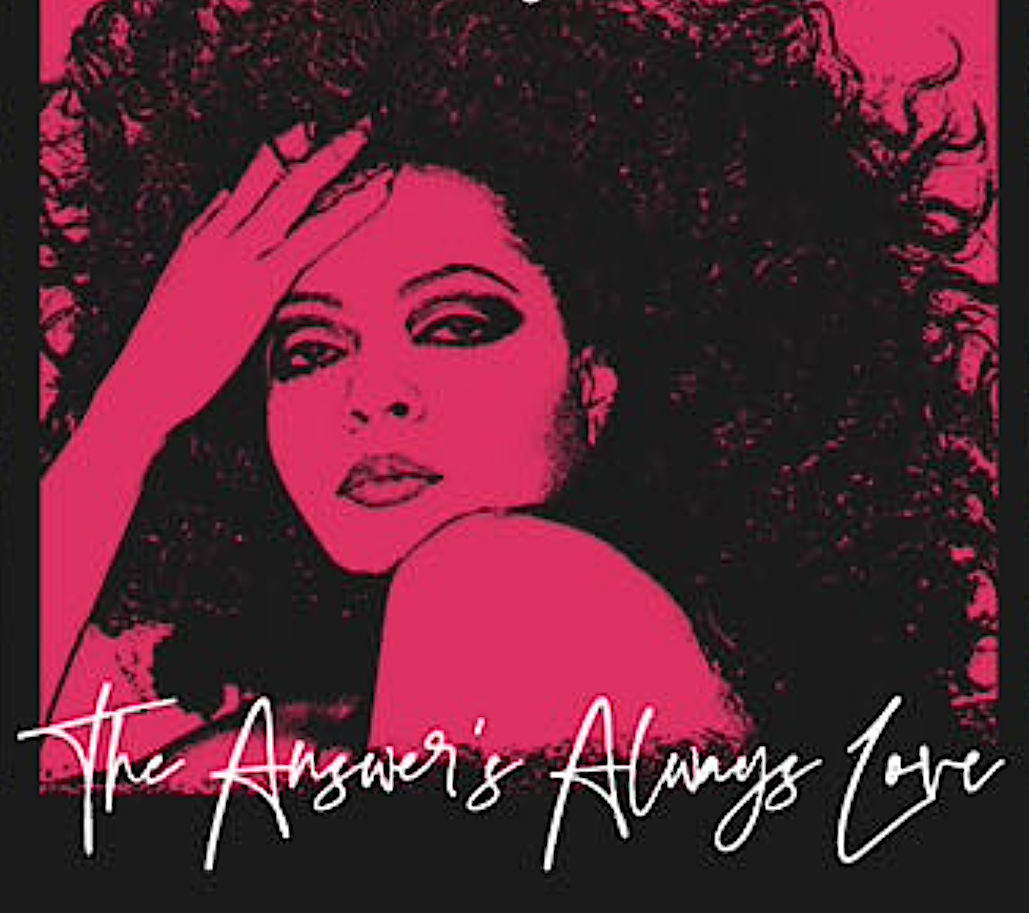
Last Time I Saw Him (1973)

“You made me believe I could believe in me once again, I’m free once again…”

One of the least-heard Diana Ross albums (and one of the most under-appreciated), this eclectic mid-70s offering is nonetheless one of her more challenging and complex works of the decade, building off the foundation laid by Touch Me In The Morning in the same way that Surrender built upon that of Diana Ross.  The song choice here is certainly all over the place — tracks run the gamut from country to pop to R&B to gospel.  Such a varied lineup makes sense, however, when one takes Diana Ross’s career at the time into account; she’d gone from girl group singer to soul belter to jazz singer to pop queen.  There is little doubt that by the time Last Time I Saw Him was released, Motown was intent on proving that Diana Ross could conquer every musical genre and every facet of entertainment imaginable.

The heart of the album, of course, is its title track, a Top 20 hit and #1 Adult Contemporary record.  If record buyers were slightly confused by the shift from “Ain’t No Mountain High Enough” to “Good Morning Heartache” to “Touch Me In The Morning”…their heads were probably spinning with the release of this tune, a country/pop novelty that features a bouncy intrumental track and a welcome energetic turn from Diana (after some virtual “sleepwalking” on her previous release, Diana & Marvin).  “Last Time…” is the work of Michael Masser, as is the second song on the LP, “No One’s Gonna Be A Fool Forever,” but the rest of the album is the work of a variety of songwriters and producers, including Bob Gaudio of “The Four Seasons.”

Though Diana Ross albums are generally far more successful when written/produced by a single entity (i.e. Ashford and Simpson, Richard Perry, and Rodgers and Edwards), the variety here works, thanks to uniformly strong performances from Diana Ross and some interesting material.  Diana’s vocal work on Touch Me In The Morning, while good, was extremely low-key, and many of her performances on Diana & Marvin sounded weak and thin.  On this album, for some reason, she sounds younger and re-energized, bringing a vitality and drama to many of the recordings that had been missing since her 1971 masterpiece, Surrender.  Hearing Diana push herself again is a thrill, and while there aren’t necessarily any classic songs here, the album is definitely a worthy addition to her discography and an essential listen for fans.

The variety here also continues to prove just how talented Diana Ross was (and is) as an interpreter of lyrics.  Just as Lady Sings The Blues proved that Miss Ross could master the subtelties of jazz, this album continues to showcase her ease in crossing genres.  There aren’t many female singers of the time who could have a #1 hit on the R&B charts, a #1 album of jazz standards, and then a #1 AC hit with what is essentially a country song (and would end up in the Top 10 of the country charts when released by singer Dottie West a few months later).  Diana Ross could.

***

1.  Last Time I Saw Him:  Easily one of the strangest singles in the Diana Ross catalog, this Michael Masser song certainly doesn’t sound “Motown” by any standards.  “Last Time…” is a country/pop confection featuring banjos, strings, horns, and glossy backing vocals that sound like they’re performed by a chorus line of Dolly-impersonators at the Grand Ole Opry.  Now, I realize that none of this sounds appealing, but the song really is fun; after her quiet jazz performances, smooth (and somtimes bland) ballads, and less-than-energetic Marvin Gaye duets, Diana Ross finally sounds a little more like herself again.  This is another one of those “story-songs” — with Diana playing the role of the woman left behind at the Greyhound bus station (and really…can you really imagine Diana Ross ever hanging at a Greyhound station??).  Because it requires such a suspension of disbelief, the song is undoubtedly a novelty; there’s a definite camp element here, and Miss Ross seems to be winking at her listeners through the entire performance.  Still, it’s an enjoyable and unique addition to her list of hit singles, having surprisingly made the Top 20 on both the pop and R&B charts, and apparently becoming the #1 Adult Contemporary (or Easy Listening) song of the entire year — it also helped win her an American Music Award for Favorite Female Soul Artist.  This isn’t a song Diana Ross would perform often in concert, but she did dust it off for an episode of “The Muppet Show” years later, and it worked brilliantly in that context; watching Miss Ross perform with the Electric Mayhem is pretty cool.

2.  No One’s Gonna Be A Fool Forever:  Another Michael Masser pop tune, this one also has some elements of country woven into its musical structure, and the melody is vaguely similar to “I Thought It Took A Little Time (But Today I Fell In Love)” — which the duo would come up with a few years later.  Diana’s vocal performance here is nice; she sings with a similar ease as on “Touch Me In The Morning,” but her ad-libs during the last 40 seconds are more powerful than anything she turned in on that song or the album it came from.  The song sounds dated today; something about the melody and production feel very mid-70s (in the same way that “All Of My Life” and several other songs from the Touch Me… album did).  Still, this is a good album track that grounds the listener a little bit after the over-the-top antics of the first song on the album.

3.  Love Me:  A beautiful ballad that has become a favorite of many fans, this is one of the stronger album tracks of Diana’s output at this time.  Her voice sounds youthful, and she sings the melody with the clarity and purity of a bell; this really is a great demonstration of her skill as a melody singer.  The last minute of the song features some of the better singing Diana had done in awhile; she reaches back into the upper stretches of her range, and sounds full-bodied during the bridge on lines like “I know exactly just where you’re going, let me come with you…”  The production on the track is lovely; the percussion line and the dreamy strings provide a perfect bed for Diana and the backing singers.

4.  Sleepin’:  This song was the second single pulled from Last Time I Saw Him, and it was a total flop, becoming only her second or third single as a solo artist to miss the Top 40 completely.  There were probably many reasons contributing to the failure of the song on the charts, but quality is not one of them.  “Sleepin’” is, simply put, a striking masterpiece; it’s one of Diana’s best performances of the entire decade.  The song’s lyrics deal with a woman in denial that her lover has died of a drug overdose; the incredibly morose story is likely a big reason for the lack of radio play, as this is definitely not a ballad anyone was dancing to at weddings or other celebrations.  Still, the sad story portrayed here is a perfect match for Diana’s skills as an actress and an interpreter of lyrics.  Miss Ross is in full command of her voice here, lending just the right balance of dramatics and subtlety, and utilizing the jazz techniques from Lady Sings The Blues on her phrasing (in particular, the line “My man’s sleepin’ nice now…” sounds like it could have come from that film’s soundtrack).  She also belts out several lines with a passion she hadn’t shown since her work with Ashford and Simpson, reminding listeners just how powerful her voice could be when she was putting her all into a performance.  Aside from the vocal performance, the production here is perfect, with a gorgeous instrumental track highlighted by a complex bassline and haunting strings.  Perhaps Motown pulled this Ron Miller-penned song as a single because it fell into a similar socially-conscious vein as Marvin Gaye’s singles of the era; in retrospect, “Love Me” would have probably been a better choice for radio, as it featured a catchier track and more relatable lyrics.  Still, “Sleepin’” is the better song overall; it’s one of Diana’s best singles and deserves re-evaluation by soul fans unaware of this beautiful tune.

5.  You:  Another Ron Miller-penned tune, this one takes Diana into uncharted territory thus far in her solo career:  light gospel.  Opening with a bluesy piano line and classic gospel organ, the introduction consists of Diana singing a series of words (“Me…find…body…mind…”) which will then figure into future verses.  Her voice grows stronger on each verse; she’s light and breathy during the introduction, but her voice is more powerful during the final minute.  Diana is more than capable of a good gospel workout, and would blow the screens off TV sets in 1987 while singing “Ninety-Nine And A Half” on her Red Hot Rhythm & Blues television special; she doesn’t quite hit those heights here, but she still turns in a nice performance.  The song itself is well-produced, but is almost killed by a long spoken verse which is so wordy and overdone that it’s almost impossible to understand.  Diana Ross is a master of spoken passages in music – play “Ain’t No Mountain High Enough” again for proof – but the words here are so clunky that even she can’t deliver them convincingly.  Still, “You” is unique enough in the Diana Ross catalog to be a standout, and fits in well with the flow of the album.

6.  Turn Around:  After five really good songs, Last Time I Saw Him comes to a screeching halt with this, one of the weakest tracks on a Diana Ross album since “The Long And Winding Road” from Everything Is Everything.  Originally recorded for the unreleased To The Baby album, “Turn Around” doubtlessly would have worked better in the context of other child-themed songs; here, coming on the heels of youthful, contemporary, and energetic tracks, it’s far too saccharine and overproduced to be enjoyable.  Part of the blame has to go to Diana Ross; her vocals are so syrupy and overdone that they become shrill and hard to listen to.  Now – years after the original release of this album – we know that there were tons of songs sitting in the vaults that didn’t make the cut.  Had one of those been placed instead of this one, Last Time… would have been a superior work.

7.  When Will I Come Home To You:  Not as weak as the previous song, this one is nonetheless another questionable inclusion, as it’s cut in a key so high that Diana Ross seems to be straining her way through the verses.  After strong singing on so many of the previous songs, Diana’s voice sounds thin, as it had on much of the Diana & Marvin album.  She’s not helped much by the dated production and overall unmemorable lyric.  As with “Turn Around,” a stronger song in place of this one (such as her cover of the Carpenters’ “Let Me Be The One,” which went unreleased for decades) would have lifted the overall quality of the album.

8.  I Heard A Love Song (But You Never Made A Sound):  Finally, after two underwhelming tracks, Last Time I Saw Him gets a kick in the pants thanks to producer Bob Gaudio, who provides Miss Ross with a rock/soul track that’s got a harder edge than anything she’d recorded up to that point.  The live percussion work and thunderous piano get the track off to a spectacular start, and Diana’s voice is strong and full-bodied from the classic opening line, “Like a bat out of hell, and a fire deep within ya…”  Thanks to the her forceful but simple reading of the lyrics and the funky but never over-the-top instrumental track, the tone here is never campy; certainly Diana Ross doing a rock song had the potential to be laughable, but she more than rises to the occasion.  “I Heard A Love Song…” is one of the absolute highlights of the album, and is a perfect example of Diana Ross’s ease at crossing genres.

9.  Stone Liberty:  This funk/rock track continues the vibe set by “I Heard A Love Song…” and features another strong vocal from Diana Ross.  This is also another Gaudio-produced track, and he has to be given credit for coming up with songs that advance the artistic growth of Diana Ross without sounding forced or inappropriate.  Diana’s vocal work on the chorus of this song, especially during the last minute, is probably her most powerful on the entire album; she’s pushing the upper limits of her range here as she had on her first three solo album.  She also sounds far looser than she ever did on Diana & Marvin, which is a shame; had she brought this kind of vitality to those recordings, the duets would have been far superior.  Motown execs probably never ever considered this song or the previous one for single release; they were likely considered too rock-oriented to get radio play.  I’m not sure that’s the case however; “Stone Liberty” likely could have gained strong R&B-airplay and showcased a different side of the singer to her public who mainly ignored this album.

10.  Behind Closed Doors:  Last Time I Saw Him, which opened with the country-ish title track, comes full circle with this song, a Charlie Rich classic produced here by Diana Ross herself.  While never given much credit as a producer (or songwriter…or anything else other than an entertainer), Miss Ross showed a keen understanding of her strengths by choosing this song, which is a low-key, catchy number that allows her to show off a confident, soulful lead vocal.  Her voice is deep and full of gravitas here; she never reaches too high or tries to do anything fancy with the lyrics.  This simple, unfettered track is a perfect way to end the LP, which has been all over the musical map; it grounds the album and returns the focus on Diana the singer.

***

Last Time I Saw Him is something of a roller-coaster for listeners, soaring to exciting highs and, unfortunately, hitting some pretty low lows.  But the variety of tracks and versatility of Diana as a performer are always impressive, and provide a sort of cohesion to the set; the theme here is that of musical exploration.  Diana Ross had done a lot of things in the few short years she’d been a solo artist, and this album served as a chance for her to try a few new tricks.  While nowhere near as successful as the Touch Me In The Morning album in terms of sales, this one is a more challenging record.  Songs like “Sleepin’” and “I Heard A Love Song…” give Miss Ross a chance to explore deeper, more complex lyrics, and there’s an excitement and a fire to many of the recordings here that had been lacking on her last few projects.  This, more than any other LP released by Diana Ross in the 70s, serves as a testament to her strength as a stylist and her skill in breaking the stereotypes that can come with being a female vocalist.

Final Analysis:  4/5  (A Unique, Exciting “Turn”)

Choice Cuts:  “I Heard A Love Song (But You Never Made A Sound),” “Sleepin’,” “You”

Trivia:
The nominees for Favorite Female Soul Artist at the American Music Awards (in early 1975, after “Last Time…” had ridden the charts) were:
Diana Ross (Winner)
Roberta Flack
Aretha Franklin

Tagged

Diana & Marvin (1973)

“First I had you, in the palm of my hand, but I let you slip through, like grains of sand…”

Just a few months after the release of her smash album Touch Me In The Morning, Diana Ross was back on record store shelves, this time as part of a duo.  Diana & Marvin teamed her with Marvin Gaye, who was on a similar winning streak with his back-to-back classic albums What’s Going On and Let’s Get It On.  Both were Motown royalty.  Both had been with the company since the early 1960s.  Both had scored previous hits with collaborations, and both had enjoyed major success with singer/songwriters/producers Nick Ashford and Valerie Simpson.

Unfortunately, in 1973, both were also moving in completely opposite artistic directions.  Much of Marvin Gaye’s early career had been built around the idea of him as heir to the Nat King Cole throne.  Marvin had been known as a “smooth” singer, his gorgeous voice tailor-made for pop standards.  As the 60s progressed, however, Gaye’s music became darker and more soulful, culminating in sizzling classics like “I Heard It Through The Grapevine” and What’s Going On.  Diana, on the other hand, had come out of the gate as a solo star with soulful albums like Diana Ross and Surrender, featuring complex grooves and emotional singing.  But with 1972’s Lady Sings The Blues, she’d begun incorporating jazz and pop techniques into her vocals, which quickly became more controlled and low-key.

Thus, both had experienced similar music phases in their careers, but at completely different times.  Had the Marvin Gaye of 1960 and the Diana Ross of 1973 recorded an album together, it could have been a smooth, classy mix of jazz and pop standards.  Had the Marvin Gaye of 1973 and the Diana Ross of 1970 recorded an album together, it could have been a fiery soul classic.  However, Diana & Marvin features both artists firmly set in their own 1973 styles, which makes for an interesting but very unsatisfying album.  Making matters worse, the two stars apparently had a falling out early in the recording process, and ended up singing their parts separately (according to many written accounts, the rift had to do with pregnant Diana not wanting to be in a studio with Marvin, who insisted on smoking pot while recording).  Though there’s a convincing chemistry on a few tracks, it’s definitely lacking on others.  Therefore, while it’s easy to wish this album had been a blockbuster for the artists, the moderate success (two singles in the Top 20, but neither even close to #1) seems deserved.

***

1.  You Are Everything:  Diana & Marvin opens, smartly, with one of the strongest songs of the entire LP.  The classic Stylistics track – a hit for the group just a few years earlier – is given a slow-burning, soulful treatment here, featuring some of the sultriest vocals Diana will turn in on the project.  Her first few lines in particular – “Today I saw somebody, who looked just like you…” – evoke the Diana Ross of Everything Is Everything and Surrender; that is to say, the breathy and sexy songstress who had by now transformed into a jazz/pop queen.  Marvin also sounds fantastic on the track; his vocals are more controlled, especially on the familiar chorus, than on many other offerings here.  More than anything, the song lends itself to being a duet nicely, and the two vocals (whether they were recorded together or separately) blend beautifully, as they should on a true duet.  The instrumental track is a nice mix of Motown musicality and Philly soul, blending the two styles with a beautifully shuffling percussion line.  This song was a big hit in the UK – hitting the Top 5 – but never released in the US, likely because it had already been a hit for another group (and another record company) in the states.  This is too bad, because it would have been an extremely strong single and sounds like it could have become something of a classic for both Diana and Marvin.  Certainly it would have sounded better on current compilations by both artists than the three songs that were actually chosen as singles.  This is, I think, the strongest vocal from Diana Ross of the entire LP.

2.  Love Twins:  A bizarre, dated song that nonetheless is quite enjoyable and one of the more listenable songs on the album.  The lyrics are straight-up psychedelic 70s, with lines like “Let’s be as one, darlin’, like the sign of the Gemini,” laughably sung with conviction by both artists.  Both Marvin and Diana, as with the previous track, at least sound somewhat invested in the song, but neither overdo it; Marvin’s falsetto impressively matches Diana’s soprano and the two sing much of the tune in unison.  Though the pseudo-funky (and very 70s-sounding) track certainly isn’t what Diana was doing best at the time, her voice doesn’t sound bad here; there are some nice, breathy deliveries, especially when she whispers, “I love you, too, Marvin.”  There’s also some fun vocal interplay here that hint at what might have been…had circumstances provided better timing and material for a duet album.

3.  Don’t Knock My Love:  This is far from being a highlight of the LP, which is why it’s so surprising that Motown execs chose to release it as a single (though it didn’t even make the Top 40).  The real killer here is the instrumental track; there have been some good arrangements of this Wilson Pickett song over the years, but this Vegas-y, overblown, brassy version isn’t one of them.  Marvin Gaye belts and growls his way through the first verse, sounding energetic and into the song, and helps make the arrangement a little more palatable; unfortunately, Diana Ross joins in during the second verse and doesn’t come off nearly as well.  Perhaps some of her performance problems were out of her control; in J. Randy Taraborrelli’s Diana Ross: A Biography, producer Hal Davis is quoted as saying, “Because she was expecting and, also, because she was sitting down, she was having trouble singing and breathing correctly” (273).  This was also, apparently, the session during which Diana walked out due to Marvin’s insistence on smoking marijuana.  No matter what was going on behind the scenes, though, Diana does sound extremely weak when compared to Marvin.  There’s a distinct lack of passion, especially during the verse she sings solo, and it makes one long for the kind of raw vocal energy she displayed on early songs like “Remember Me” and “I Can’t Give Back The Love (I Feel For You)” from Surrender.

4.  You’re A Special Part Of Me:  This was the first single released from Diana & Marvin, and it was a decent-sized hit, making the Pop Top 20 and even the top 5 on the R&B charts.  Produced by Berry Gordy, Jr. (Mr. Motown himself!), the song is a pretty good, low-key showcase for the two singers, but suffers from the lack of a strong hook and memorable lyric.  The instrumental and vocal performances are actually similar to “You Are Everything,” but that song is a far superior composition – it is so much more memorable that including both songs on the album almost kills this one.  Both Marvin and Diana do sound reasonably relaxed on the song, and neither particularly outshines the other; their ad-libs at the end work quite well together.  This is far from being a classic for either artist, but it wasn’t the worst choice for a single, and at least they both sound good and well-matched…

5.  Pledging My Love:   …unlike this disaster of a song.  Okay, maybe “disaster” is a bit harsh, but this popular vintage ballad is easily the weakest song on the album.  A big part of the problem, I think, is that it’s cut in a key so high that neither of singers sounds particularly good.  Diana, on her solo verse, is reaching so far that her voice sounds thin and sometimes shrill; Marvin, meanwhile, sounds awkward in the use of his falsetto at about two minutes in, when singing “I’ll never part from you”…and this is from one of the great male falsetto singers!  He’s also seemingly trying to outsing his partner, displaying absolutely no regard for the fact that he’s not on the record alone.  Aside from the issue of the high key, the track is extremely over-dramatic; there’s a heaviness to the instrumental and backing vocals here that almost feels stifling, especially when compared to the enjoyably light and lilting tone of songs like “Stop, Look, Listen (To Your Heart).”  There were better songs left in the vaults, and it’s a shame that they were left off in favor of this, one of the least enjoyable performances of the period from either singer.

6.  Just Say, Just Say:  This is the only track on the album written and produced by Ashford and Simpson, who were the masters of the Marvin Gaye duet and the team that had pushed Diana Ross to new heights as a vocalist over the past few years.  Therefore, this would seem a match made in heaven – if anyone could produce a classic on Marvin and Diana, it would be them, right?  Well, unfortunately, in this case the answer is no.  “Just Say, Just Say” is a pretty ballad with some interesting guitar work both on the intro and during a vocal break, but it’s just not a very strong or memorable song overall.  Ashford and Simpson had provided Diana with dynamite tunes on the two albums they’d done with her – tracks like “And If You See Him” (originally worked on with Marvin in mind) and “Dark Side Of The World” (also recorded but unreleased by him) would have made great duets for the duo.  Again – timing probably has something to do with the lack of success here; this is reportedly the last song by Ashford and Simpson done while they were under contract to Motown, and soon they would leave for Warner Bros. records.  Chances are the songwriting/producing team just weren’t into the work they were doing at Motown – and coupled with two artists who clearly weren’t that into this project, the results aren’t really terrible…just bland.

7.  Stop, Look, Listen (To Your Heart):  This is the highlight of the entire album, a beautifully produced and sung piece of 70s soul.  Like “You Are Everything,” this was also a hit for the Stylistics in the early 70s, and as a composition it is so far superior to the originals on this LP that it really sounds like it should have been on a totally different album.  The instrumental track is lush and gorgeous; it appropriates the sound of Philly soul while avoiding the trap of becoming a campy copy.  Marvin Gaye and Diana Ross both offer expert vocal performances; they match each other perfectly, both singing with the comfort of seasoned pros.  Diana, in particular, sounds sexy and confident on her solo verse, using a lower register that comes as a relief after the high, thin vocals of songs like “Pledging My Love” and “Don’t Knock My Love.”  Never once does Marvin sound like he’s trying to outshine his female counterpart, either, which makes this a far more balanced duet than several other songs on the collection.  This was a decent-sized hit in the UK when released in the 70s, and found a new audience when it was included on the soundtrack to the 2001 film Bridget Jones’s Diary.  The “new life” for this song is completely deserved, as it really is the best work the two would record together.  It’s a shame it wasn’t chosen as a single in the states, as it — along with “You Are Everything” — could have been a big, lasting hit for the duo.

8.  I’m Falling In Love With You:  In terms of the original compositions on Diana & Marvin, this is by far the best-written; it comes only after the two Stylistics covers in terms of quality here.  As with the previous song, both singers sound relaxed and well-matched on this soul ballad; Diana sounds more confident than on some earlier tracks, and Marvin isn’t quite as out-of-control here.  In a battle of the original songs here, “I’m Falling In Love With You” is far superior to “You’re A Special Part Of Me” — it’s odd that the latter was chosen as the first single, when this is a catchier, better-produced song.  There’s a quality to the lyrics (“You sting like a bee, but you’re sweet as honey…”) that recalls Motown hits of the 60s, and provides some nice nostalgia while listening to the singers.

9.  My Mistake:  This was the album’s second single and a moderate hit; it still turns up on compilations and is probably the best known tune on the LP.  This is unfortunate, because while it’s a pretty catchy song, it doesn’t show Diana Ross in a very good light at all.  While Marvin Gaye is a good match for the uptempo, energetic track, Diana Ross just don’t sound into the song at all; there’s a laziness to her vocal performance, and she actually sounds a little flat (for example, in her ad-libs at 1:42 in).  The kind of raw energy of her vocals on Surrender are what she needed to carry the song, and it doesn’t happen.  This is probably one of her worst efforts on the album (though better than “Pledging My Love” and “Don’t Knock My Love”), which is why it’s so strange that it was released as a single.  Obviously Diana Ross didn’t need to prove herself as a singer to anyone at this point; still, you’d think Motown would have wanted to show her off in a better light than this.

10.  Include Me In You Life:  Another low point of the album, this song is a sad final impression to leave listeners with; it’s a weak, odd song that features another set of lethargic vocals from Diana Ross, as well as Marvin Gaye in this case.  The vocals actually sound like “scratch” vocals — in other words, a practice run to use as a guide for later.  Both singers actually seem to go off-tune during sections of the song, and there’s some pretty lame speaking from each one.  But even with better performances from Ross and Gaye, the song would still be a hard sell; the repetitive “Darlin’…darlin’…darlin’…darlin’…darlin’…” is a pretty irritating hook.  This song is pretty representative of the problems with this project as a whole:  sub-par material and a lack of enthusiasm from the two singers involved.

***

This is an album that’s at once frustrating and also kind of hard-to-dislike.  The trio of best tracks — “You Are Everything,” “Stop, Look, Listen (To Your Heart),” and “I’m Falling In Love With You” — are incredibly satisfying and showcase both artists well.  But the worst songs — “Pledging My Love,” “Include Me In Your Life,” and “Don’t Knock My Love” — are probably among the worst either singer released in the entire decade.  Though there was obviously behind-the-scenes drama (and that drama can be heard in the finished product), the lack of great material is, in the end, the biggest problem with Diana & Marvin.  Gaye himself was writing some of the best soul songs ever during this period — and had even provided Diana with the stellar “Baby It’s Love” on Everything Is Everything – and it’s a shame he didn’t submit any originals here.  And had Ashford and Simpson not been on the brink of leaving the company, perhaps they could have handled the entire LP, which could have resulted in a soul classic.  Instead, listeners are left with a lot of “what ifs…” and “could have beens…” — and while Diana & Marvin is still listenable, it’s way too uneven to be considered a truly memorable project.

Final Analysis:  3/5  (Not Quite ”Special” Enough)

Choice Cuts:  “Stop, Look, Listen (To Your Heart),” ”You Are Everything,” “I’m Falling In Love With You”

Tagged

Touch Me In The Morning (1973)

“All of your life to share is all I’m asking, all of the minutes and the years…”

If the first three solo albums of Diana Ross’s career (Diana Ross, Everything Is Everything, Surrender) comprise the first definite era of her solo stardom, then this – her first studio album following the Lady Sings The Blues soundtrack – neatly kicks off the second.  That trio of early 70s albums were strong and soulful, and took Diana Ross out of the pop-leanings of the Supremes and placed her back squarely in R&B territory.  But with the film and soundtrack release of Lady, featuring Diana Ross’s stunning renditions of the Billie Holiday jazz catalogue, the singer’s career shot to a new level.  No longer just an R&B diva and “former lead singer of the Supremes,” Diana Ross was now truly an international star, and her recording career would never be the same.  She herself is quoted in David Nathan’s The Soulful Divas as saying, “Somehow I feel [a little] lost between ‘Baby Love’ and ‘Lady Sings the Blues.’  I’m not sure which direction my career will take now” (153).

The direction she took was up – straight to #1 – with the hit song “Touch Me In The Morning.”  The song was a huge success and is now a Diana Ross classic, and was the perfect continuation of her solo career.  Just as “Ain’t No Mountain High Enough” showcased a major growth from her work with the Supremes, “Touch Me…” shows off a further maturation in Diana’s voice, which had lost some of the breathiness from her earliest solo recordings but gained a smooth, velvety tone used in her jazz recordings.  The song was the work of Michael Masser and Ron Miller (she’d have a few more ballad hits thanks to Masser later in her career), but the album that followed was mainly put together by Deke Richards, who’d masterminded her Everything Is Everything.

Much in the way Diana Ross (1970) served as a definition for Diana as a solo star, the Touch Me In The Morning album helped re-define Diana Ross as an entertainment star.  The songs are tailored to a much broader audience, mixing R&B and pop in equal parts, and even retaining some jazz for the new fans gained thanks to Lady.  It is to Richards’s credit that this time – while he’s again working with a variety of songwriters and producers, as he did on Everything Is Everything – there’s a cohesive feel to the album, with each and every song building off the adult contemporary tone set by the title track.  This is not “bubblegum” pop music; Diana Ross is now singing about adult relationships, motherhood, and social issues.

***

1.  Touch Me In The Morning:  The instantly-recognizable piano chords that open this Grammy-nominated, #1 hit immediately set the grown-up, classy tone that will be carried through until the end of the album.  The Diana Ross singing here sounds far more mature than the one who squealed “This is My Place…” on Everything Is Everything, which is pretty astonishing considering only about two years separated the two songs.  Ron Miller and Michael Masser came up with a perfect vehicle for the new, grown-up Diana Ross; the song is a pop masterwork, with a sweeping chorus and memorable lyric.  Diana herself turns in a confident, laid-back performance; she is far less-giddy than she sounded on her earliest solo albums, and clearly is incorporating some of the relaxed singing techniques of her jazz performances here.  On the opening especially, when she’s accompanied by only the piano, there’s a smoothness to her voice that wasn’t present at all on songs like “Now That There’s You” from Diana Ross, on which she sang a similar introduction in far breathier, youthful voice.  The overdubbed ending, during which Diana Ross sings along with herself, almost in a duet, is a stroke of genius that makes the recording feel modern even today.  Though there’s been much written about the turmoil behind the recording process of the song (apparently Diana Ross was…shall we say…unmotivated to work on it), it’s to everyone’s credit that it ended up as such a great record.

2.  All Of My Life:  Another memorable pop tune, this one was a hit overseas (though, oddly, never released in the United States).  The song isn’t as strong as “Touch Me…,” but I suspect it still could have gained plenty of airplay had it been released as the second single here at home.  Listening to the song today, the biggest issue is that is souns dated; the instrumental track and background vocals are a bit overpowering and very 1970s-ish, and while Diana gives a nice performance, she does sound like she’s straining to hit the high notes, which is odd considering she’d sung higher on much of her work with Ashford & Simpson.  Still, this is one of those songs that easily sticks in the brain, and was a good inclusion here.

3.  We Need You:  This song apparently was supposed to be the second single, though it ended up never being released.  A Deke Richards production, “We Need You” is light years better than some of the work the two churned out for Everything Is Everything, and is a sad, shuffling soul ballad that gives Miss Ross the chance to show off a little bit of the passion that’s missing from some of the other performances on this album.  Her vocals are really nice on the song; similar to “I’m Still Waiting,” this is a story-song, and Diana Ross is never better than when she’s telling a story to her listeners.  She tailors her performance to that story, keeping it simple and slightly mournful, never being too dramatic nor too weak.  I’m not sure this would have been a huge hit if it had been released, but it is a nice album track.

4.  Leave A Little Room:  Thematically, this is another perfect choice for Touch Me In The Morning, as it’s a mature song about love, loss, and moving on.  The composition itself isn’t as immediately grabbing as the tunes that proceed it, however, due to an unusual chord progression (the verses and chorus sound like they could have come from completely different songs) and the instrumental track, which has a much more country/pop feel than anything else on the album.  Though Diana capably delivers the song, and her voice is nicely doubled on the choruses, the vocal performance isn’t a particularly interesting or powerful one.  Still, the song seamlessly fits into the album and serves as a nice bridge between the sadness of “We Need You” and the joy of the love song that follows…

5.  I Won’t Last A Day Without You:  This song is best known as a hit by The Carpenters (who took it to the Top 20 in 1974), and has been recorded by several popular singers over the years, including Barbra Streisand.  The song itself is one of the strongest on the album; it’s a beautifully written work with a memorable chorus and lyrics, and Diana turns in a lovely vocal here, giving an delicate, yet assured performance.  As with “Leave A  little Room” and “All Of My Life,” the song certainly sounds like it came out of the early 1970s; there is a dated quality to the production and especially the backing vocals.  But because the song itself and the lead vocal are so strong, it doesn’t really matter.  This is a perfect addition to the album, and one of the more enjoyable album tracks of Diana’s mid-70s career.

6.  Little Girl Blue:  This is one of the unqualified highlights of the album, a stunningly beautiful inclusion that ranks with the best work Diana Ross would ever produce.  Apparently recorded for the Blue album (a proposed follow-up to Lady Sings The Blues which went unreleased for several decades), this Rodgers and Hart standard manages to merge perfectly with the contemporary songs that surround it here, while also evoking the work Diana had turned out for the Lady soundtrack.  The instrumental track here is beyond superb; the jazz guitar work is an absolute joy, and the sweeping strings here are achingly beautiful.  Diana’s performance, meanwhile, is masterful; this is as good as her voice would ever sound in the mid-70s.  Relaxed and confident, Diana easily reaches both the high and low ends of her range, and her crystal-clear enunciation is perhaps put to use here better than on any other recording from the era.  But aside from the technical aspects of her performance, there is something indefinable about the way Diana Ross sings “Little Girl Blue” that lifts it far above an ordinary piece of album filler.  This is a performance of reserved emotion, in the same way that “God Bless The Child” and “My Man (Mon Homme)” were on the Lady soundtrack.  There’s a complexity here, a subtelty that hints at an entire story happening beneath the surface of the lyrics, that makes it a compelling listen.  This kind of subtle shading is something Diana Ross is so good at that it’s too often taken for granted or, unfortunately, completely overlooked…which is a real shame.  This is a masterpiece.

7.  My Baby (My Baby My Own):  This is one of the great surprises of the Touch Me In The Morning album, and a song with a instrumental track so good that it’s a surprise it hasn’t been discovered and sampled by a modern-day R&B/Hip-Hop artist (if it hasn’t already).  This is a song that takes the basic groundwork laid by “We Need You” and drags it into the complete depths of despair; to describe the song as mournful doesn’t even do it justice.  Diana doesn’t so much sing the sad lyrics like “How could your Daddy leave us all alone?” as wail them, her voice thick and deep with emotion.  Her wordless vocal work at 2 minutes into the song is devastating; she sounds like she’s crying straight into the microphone.  The instrumental track is top-notch 70s soul; the repetitive 3-note piano hook is so brilliant that, again, it’s begging to be used again.

8.  Imagine:  A nice, laid-back cover of the John Lennon classic.  Though it’s never been a favorite of mine, the Lennon compsition is undeniably catchy, and Diana’s version is simple and straight-forward.  The most notable thing about this inclusion is that it bears Diana’s name as producer, and thus is her first credited album track in the capacity.  It’s to her credit that while not a standout here, the familiar song does seamlessly fit in with the rest of the album.

9.  Medley: Brown Baby/Save The Children:  Touch Me In The Morning closes with an eight-and-a-half minute, pure soul medley of Oscar Brown, Jr.’s “Brown Baby” and Marvin Gaye’s “Save The Children.”  Like “Little Girl Blue,” this is a hidden treasure of the album that should be played for casual fans unaware of the diversity of work recorded by Diana Ross.  Much of the success of this medley lies in the phenomenal instrumental track, featuring a soulful groove as good as anything on Gaye’s classic What’s Going On album (which originally featured “Save The Children”).  Diana’s vocal work is top-notch as well, her relaxed and emotional delivery as good as anything else on the album.  This is a perfect way to close the album, as the song once again captures the adult, soothing, almost daydream-like vibe set from the start by “Touch Me In The Morning” and carried through most of the songs.

***

Touch Me In The Morning was a big success, hitting #5 on Billboard’s top album charts and #1 on the R&B album charts, a deserved success since it stands as one of the stronger albums in the Diana Ross discography.  That the album works as such a complete musical piece is surprising, considering it’s made up of songs by a handful of writers and producers, and many of the songs were apparently recorded for other projects that were never finished.  Still, it’s a testament to how strong the material was that Diana was being given in the mid-70s.  Though Touch Me In The Morning is not as musically interesting as Last Time I Saw Him, which would come a year later, it is much more even, and therefore makes for a nice, complete listening experience.  I wish some of the songs didn’t sound as dated, and that at times Diana Ross would’ve pushed herself vocally a little more, but it’s hard to complain about an album that features some sterling highlights and on which even the weakest songs are still listenable.

Final Analysis:  4/5  (Only “A Little Room” For Improvement)

Choice Cuts:  “Little Girl Blue,” “Touch Me In The Morning,” “Medley: Brown Baby/Save The Children”

Trivia:
The Grammy nominees for Best Female Pop Vocal Female Performance that year were:
Roberta Flack, “Killing Me Softly With His Song” (Winner)
Bette Midler, “Boogie Woogie Bugle Boy”
Anne Murray, “Danny’s Song”
Diana Ross, “Touch Me In The Morning”
Carly Simon, “You’re So Vain”

Tagged

Lady Sings The Blues (1972)

“Feel like I wanna shout, give the piano player a drink because he’s knockin’ me out!”

After showing off a new power/emotion in her soulful first three albums as a solo artist, Diana Ross made a complete transformation for this, the soundtrack to her first film.  Much of the passion of her earliest solo work –“Ain’t No Mountain High Enough” and “Remember Me” for example – was likely due in part to her desire to create a new identity, one that didn’t include being the lead singer of the Supremes.  However, once Lady Sings The Blues hit theatres in 1972, Diana Ross was done proving anything.  The movie was a smash, and not just with audiences; Ross won a Golden Globe as “Most Promising Newcomer” and was nominated for a Best Actress Academy Award and a BAFTA (British Academy Award).  This double-LP soundtrack album, meanwhile, hit #1 on the album charts and won the Favorite Pop Album American Music Award.

Getting there, however, wasn’t so easy.  As Diana writes in her memoir Secrets of a Sparrow, “When the announcement was made that I would be playing Billie Holiday, my mere acceptance of the role sparked a great deal of criticism….We hadn’t even started shooting and the press had already turned against me” (164).  The divide between Billie Holiday – drug-addicted jazz singer – and Diana Ross seemed too great for people to fathom.  This is especially true when it came to the music each woman sang.  Billie Holiday’s was (and still is) one of the most instantly-recognizable voices in all of music, her unique and throaty vocals often conveying a deep sadness and pain.  How could Diana Ross match that?

Miss Ross answered the question in her book:  “During my nine months of research, I made some important decisions…one of them being that I would not try to sound like Billie….I would work to bring through my own sound.  Strangely, since I listened to almost nothing else during that time, I took on the same phrasing she used, and in this way, I ended up sounding a lot like her after all” (166).  This approach – mixing the essence of Holiday’s often understated, relaxed approach to music with her own sound – led to some of the finest work of Diana’s career, and what is one of the great collections of music from the decade.  Even today — perhaps especially today, with so many contemporary singers released “standards” collections – the double-album soundtrack more than stands the test of time.  So much of this success is also due to the musical direction of Gil Askey, whose wonderful arrangements (and team of top-notch musicians, some of whom apparently played with Billie Holiday) are classy and timeless.

Most of the first LP is filled with dialogue and song snippets from the movie.  Though Diana’s vocals are featured on some of these – notably “Them There Eyes” and “The Man I Love” – they are overdubbed with applause and lines from the film.  Some of the songs also come at points during the film where Billie Holiday is under the influence of drugs, and thus Diana Ross is not only singing, but “acting” her way through them.  The second LP, however, features the studio recordings of several Billie Holiday songs, and is what I’ll discuss here.

***

1.  Fine & Mellow:  The studio recordings open, fittingly, with a song written by Billie Holiday herself, and recorded by her in the late 1930s.  The loud, blaring horns of the introduction herald the arrival of a new, laid-back Diana Ross, who sings with a resigned swagger about the man who treats her “oh, so mean.”  One of the bluesiest songs on the soundtrack, the arrangement here is also one of the most exciting instrumentals, featuring top-notch rhythm and horn work.  It’s a relatively repetitive song, but Diana’s wise reading is perfect, especially when she reaches into her higher register to plead, “But if you treat me right, daddy…”  The lyrical content here is much more mature than what Diana Ross had been recording thus far in her career (the song covers drinking, gambling, and, basically, lots of sex), and had she covered it while with the Supremes, it probably would have been a complete mess of cute affectations.  Now, she has a perfect understanding of the song, and the tone she presents on the performance is one that sets the bar high for the rest of the album.

2.   Lover Man (Oh, Where Can You Be?):  A gorgeous song with an absolutely beautiful instrumental track and arrangement by Gil Askey, this tune was apparently written for Billie Holiday in the early 40s, and relaxes the atmosphere after the much more brash “Fine & Mellow.”  Diana’s smooth, almost fragile reading of the bridge does really recall Holiday’s sound, especially when hitting the higher notes required by the song.   Her performance here is downright miraculous when compared with the singing she displayed on her solo work with Ashford & Simpson; she truly sounds like a different singer, and yet this song was probably recorded mere months after the soul/gospel tracks on Surrender.

3.  You’ve Changed:   Easily one of the strongest tunes on the soundtrack, this is a perfect example of how Diana Ross merged her own sound with that of Billie Holiday.  Her performance here is frail and stark, matching the essence of much of Holiday’s later output (in particular her work on the LP Lady In Satin, on which she recorded this song) while still retaining the crisp Diana Ross tone.  This is a masterful, haunting performance and one of the highlights of the soundtrack.

4.  Gimme A Pigfoot (And A Bottle Of Beer):  One of the few up-tempo, swinging songs on the soundtrack, it’s nice to hear a little joy in the music, especially after the dark “You’ve Changed.”  Notable is the way she handles the lyrics; by staying completely honest to the feeling of the period, the song sounds authentic.  It would have been easy for this song, with such dated lyrics, to almost sound like a parody, but Diana Ross easily sidesteps that trap by keeping the performance simple and light.

5.  Good Morning Heartache:  The only song released as a single, this has probably become the most well-known song from the soundtrack, and managed to make the Billboard Top 40.  Diana does sound more like “herself” here than on songs like “You’ve Changed” and “Strange Fruit” – so it makes sense that Motown chose this one for a radio release.  The vocal here is relaxed and mature, with Diana’s soprano as clear and clean as it would ever be on record.  Often included on “Greatest Hits” compilations, the song easily stands beside hits like “Touch Me In The Morning” even though it was written decades earlier, thanks to a timeless track by some master jazz instrumentalists and pitch-perfect performance from Diana Ross.

6.  All Of Me:  One of the catchiest, most swinging songs on the soundtrack, this is the second time the song is featured (it’s also on the first LP in a shorter version, featured as part of the scene where Billie auditions in a club to be a singer).  If “Good Morning Heartache” hadn’t been released as a single, I think this could have been, as Diana evokes not only traditional jazz singers, but also her expertise in delivering a good pop lyric.  It was probably rejected as a single candidate because the arrangement is a little too “big band” and features a somewhat lengthy instrumental horn break.

7.  Love Theme:  Not a Diana Ross performance, this is Michel Legrand’s musical composition that punctuates many scenes in the film.  It’s a beautiful tune, and would later get lyrics by Smokey Robinson and be released as a single by Michael Jackson as “Happy” (…how weird is it that Diana didn’t record and release it as a song?).

8.  My Man (Mon Homme):  One of the best performances on the album, and one of Diana’s most thrilling performances on record ever.  She has done this song many times over the years (she even recorded it as part of the Supremes final show two years earlier), but there’s no substitute for her recorded version here.  Diana’s voice sounds almost choked with emotion on the first 1:30 of the song, as she sadly sings about the love for a man who’s no good to her.  Sometimes when she performs the song live, Diana overdoes this portion of the song, forcing it to be a little too dramatic; here, the simple, sad loneliness in her voice here is more than enough.  Of course, after the first 1:30, the song eases up a notch, as the rhythm section kicks in, followed by the strings and horns, and culminates in a stunning final 45 seconds with Diana leading the way.  Though unfairly compared with Barbra Streisand’s reading of the song in Funny Girl, the two are very different performances; while Streisand totally lets loose and belts out the final portion of the song, Diana Ross never really lets go completely.  The tension that remains in her voice through the end provides a different reading to the song and meaning to the lyrics; Diana Ross sounds like someone struggling until the very end to maintain some sense of command, rather than totally giving in to love (which Streisand seems to be doing)…which makes this an extremely complex and interesting recording.  One of Diana’s best.

9.  Don’t Explain:  Another song actually written by Billie Holiday, Diana’s smooth, understated performance is a great showcase for her skills as a singer.  Listen to the way she carries notes down to the lower edges of her range, and smoothly pushes them up again; she truly sounds like a jazz siren here.  She still performs this song in concert, and sounds just as a great in 2012 as she does here.

10.  I Cried For You (Now It’s Your Turn To Cry Over Me):  Another uptempo, swinging tune, this one again shows off the mastery of the jazz musicians recording the track.  The rhythm section, piano, and horns are absolutely superb, and Miss Ross does a nice job swinging along, although I prefer her slightly-more joyful performance on the similarly-paced “All Of Me.”

11.  Strange Fruit:  Probably the most challenging song on the album, featuring a haunting lyric about the lynching of African-Americans in the south.  The sad, disturbing words paint a vivid picture and the arrangement — featuring only a piano and Diana’s voice — is perfect.  For her part, Diana Ross holds back the emotion, letting the lyrics speak for themselves; she keeps it simple and stark, which is the right choice.  It’s a beautiful performance, but not an easy listen.

12.  God Bless The Child:  This is the vocal performance that closes not only this album, but also the film, and it’s a dazzling finish.  This, like “My Man,” is one of the best efforts of Diana Ross’s entire career; her crystal-clear voice is irresistible, and gets the best possible treatment thanks to what I’d say is the best instrumental track on the entire soundtrack.  If I had to choose one song off the soundtrack that best represents Diana’s work on it, this would be it; the way she incorporates Billie Holiday’s technique into her own is what makes the album as a whole so successful, and again, that it came so soon after the soul belting of Surrender is absolutely amazing.  Diana Ross sounds completely mature and capable with the material here, in a way that I just don’t think most other popular singers would.  This is a masterpiece.

13.  Closing Theme:  And Michel Legrand’s instrumental theme brings it home!

***

I truly believe that this album, coming right on the heels of the triumph of Surrender, is the definitive proof of why Diana Ross is in a class of her own as a vocalist.  Again, I cannot think of a single contemporary pop/R&B star — or even many of Diana’s contemporaries in the 1960s/70s — who could have successfully recorded a masterpiece of soul, then immediately followed it with a jazz album capturing the flavor of one of the genre’s best-loved singers.  The versatility is really incredible and what sets Diana Ross apart as a singer.  There is an ease and effortlessness to the performances here that most people who record “standards” albums (Rod Stewart, I’m looking at you…) just don’t get.  Diana Ross’s recordings of the Billie Holiday catalog here never feel like a novelty, they feel like a totally natural progression of her career as a singer.

Final Analysis:  5/5  (“Fine & Mellow” & Perfect)

Choice Cuts:  “My Man (Mon Homme),”  “God Bless The Child,”  “You’ve Changed”

Trivia:
The nominees for Favorite Pop Album at the American Music Awards were:
Diana Ross, Lady Sings the Blues (Winner)
Seals & Crofts, Summer Breeze
War, The World Is A Ghetto

Tagged

Surrender (1971)

“I roll the dice, 7-11…you’ll either take me down, or you’ll take me to heaven…”

Diana Ross’s third solo album is one of the best of her career, and the absolute best of her early 1970s output.  Not only that, but it’s one of the best Motown albums of the era, period.  This, my friends, is a work of classic soul, featuring the strongest singing Diana Ross would do until the end of the decade and some of the finest songs by writing/producing team Nick Ashford and Valerie Simpson.  Ashford & Simpson had, of course, delivered Diana’s first solo LP, and while there’s not a single song here stronger than the first album’s “Ain’t No Mountain High Enough,” this album as a whole is far superior, more complex piece of work.

Perhaps Surrender isn’t generally placed in the category of great Motown albums because it lacked a massive hit single.  Though “Remember Me” was a Top 20 hit and two other songs made the Top 40, none of them are as instantly recognizable as later hits like “Touch Me In The Morning” and “Upside Down.”  At the time, it was probably also lost due to the fact that it was one of four Diana Ross albums (three studio and one TV special soundtrack) released in less than two years.  It’s a shame that none of the songs caught on the way “Ain’t No Mountain…” had, as a stronger single might have helped push the album up the charts and increase its visibility.

Surrender is also important because it’s the last true soul album Diana Ross would record for several years.  This is due to the fact that her entire career was about to vault to the next level thanks to her starring role in 1972’s Lady Sings the Blues.  In the wake of her Oscar-nominated movie and #1-selling soundtrack, the singer’s entire vocal style would change; she would lose much of the breathy, raw power of her early recordings and replace it with a smooth, sophisticated style that leaned much more toward pure pop than R&B.  Surrender, therefore, is the end of the first phase of Diana’s solo career – a portrait of the singer as young, exciting, vital woman bursting onto the music scene alone in the spotlight – and if it had to end, at least it came with one of the best collections she would ever release.

***

1.  Surrender:  Opening with thunderous, repetitive piano playing and a driving percussive beat, the album’s title track is immediately more fiery than anything Diana had thus recorded in her solo career.  The clever, playful lyrics are as memorable as those in the brilliant “Keep An Eye” from Diana’s solo debut, and the singer is completely committed to them, turning in a commanding vocal performance which erupts into soulful abandon at 1:30, when she begins her ad-libbing with a dazzling “Ow!” reminiscent of her work during the climactic chorus of “Ain’t No Mountain…”  Valerie Simpson’s piano work here is absolutely stunning, displaying a strong gospel influence, and the rest of the Funk Brothers turn in impeccable performances.  Though it’s not the strongest song on the album, “Surrender” is a perfect opener, and shows Diana Ross at the absolute top of her game.  Though it was released as a single, it wasn’t a major hit for the singer; in retrospect, this might be because it was too soulful a song for a singer with such a broad pop fanbase.  This is a shame, because if more people were aware of work like “Surrender” and other songs on this album, there’s no doubt Diana Ross’s abilities as a vocalist would be given much more respect.

2.  I Can’t Give Back The Love I Feel For You:  The complex, soulful, slightly dark vibe set by the opening tune is continued here, in a song I’d argue showcases Diana Ross’s strongest vocal performance until her work on The Wiz soundtrack seven years later.  A song previously recorded by Rita Wright (Syreeta) and even Diana Ross as part of the Supremes, Ashford & Simpson here arrange it in a similar style to “Ain’t No Mountain…” in terms of spoken passages, sung refrains, and passionate, over-the-top climax.  As with “Surrender,” the instrumental track here is superb, featuring another fabulous piano performance by Simpson and a prominent bassline, along with blaring, memorable horns that help whip the song into a frenzy during its final minute.  Diana Ross gives an impassioned reading of the lyrics for the first two and a half minutes, but as soon as she belts out the lyric, “…’cause it will grow ‘til the world won’t go ‘round…NO MORE!” she transforms into a soul singer on par with any other.  In the liner notes to the re-release of this album, Valerie Simpson says Diana’s ad-libs at the end of this song are “in the stratosphere!” – and I couldn’t put it any better than that.  The incredible range and power on display here, as with her work on the preceding track, should be enough to silence any critics who say Diana had a limited vocal ability.  This song is one of the undoubted highlights of Diana’s career.

3.   Remember Me:  The album’s biggest hit, this was a Top 20 success and the single that immediately followed the #1 “Ain’t No Mountain…”  Though it’s not necessarily considered a classic in quite the way her other solo hits are, this is a great single and features another strong vocal performance by the singer, who continues to showcase a power in her voice that she’d rarely used while with the Supremes and had mainly subdued in her Everything Is Everything album a few months earlier.  Once again Ashford and Simpson display an ability to produce a timeless song; while this undoubtedly sounds like an early 1970s production, it doesn’t have the dated, almost-campy feel of many of the productions on Everything Is Everything.  The backing vocals are particularly soaring on this track, and it’s to Diana’s credit that they don’t outshine her at all, but enhance her own performance.

4.  And If You See Him:  And Ashford, Simpson, and Ross make it four in a row with this song, another glorious slice of 70s pop/soul that opens with heartbeat-like guitar/bass notes that set a nice tone of urgency which Diana matches in her vocals, especially during the swinging chorus, in which she really lets loose.  Unlike the previous three tracks, there are no backing vocals here, so this is a nice chance for Miss Ross to totally command the song, and she does so easily.

5.  Reach Out, I’ll Be There:  The first (and only) song not written by Ashford & Simpson, the duo nonetheless arranged the classic Four Tops hit into something that sounds like one of their originals, aping their own “Ain’t No Mountain…” formula of slowing it down and letting it build slowly to a thunderous finale.  I have a feeling many fans are split on this song; though it was released as a single, it was only a moderate hit and certainly isn’t considered a classic among her catalogue.  That said, I think it stands as a major highlight of both the album and of her whole career; while it might pale somewhat when compared with the masterpiece of “Ain’t No Mountain…,” it’s a brilliant piece of work on which Diana displays some gorgeous vocal work.  Her crisp, smooth vocals during the first three minutes of the song foreshadow her work in Lady Sings the Blues, as she lags behind the beat with the command of a seasoned jazz singer.  There’s also a roundness to her high soprano here that was often missing in her earlier work; she could sound brassy when going for high notes on her later-Supremes tracks, but here her voice is as clear as a bell.  That said, she matches her fantastic, soulful work on “Ain’t No Moutain…” at the end of this song, when, at nearly four minutes in, we finally hit the “I’ll be there” climax.  As with “I Can’t Give Back The Love…,” Diana’s voice absolutely soars here, belting out notes heretofore unheard of in her career.

6.  Didn’t You Know (You’d Have To Cry Sometime):  Perhaps not as immediately grabbing as the five superb songs that precede it, this song  — originally recorded and released by Gladys Knight and the Pips – is still a good addition to the album and a nice piece of early 70s soul.  The fact this is probably one of the two or three weakest tracks on the album speaks to what a great album this is; on either of her two earlier releases, this song would be a stand-out.  However, in the context of a work that includes such strong singing and production, it tends to get lost of a little.

7.  A Simple Thing Like Cry:  Another song featuring extremely strong vocals from Diana, the lyric here isn’t as memorable as “Surrender” or “Remember Me,” but it’s saved by great production and the passionate, reaching vocals, especially in the last minute of running time.  Diana pushes the top of her range here, as in “Can’t Give Back The Love…,” and she sounds especially full-bodied as she wails the word “cry” several times toward the end.  There are moments here, as with so many other songs on this album, that are goosebump-inducing — the power and emotion in Diana’s voice is that stunning.

8.  Did You Read The Morning Paper:  Similar to her previous album’s “I’m Still Waiting,” this is a story-song – the lyrics here tell the tale of a woman who sees a picture in the newspaper of her lover…with another woman.  Because Diana Ross is a superb lyrical storyteller, the song works; in the hands of a less-talented artist, it might be plodding.  Diana more than handles the couple of key changes toward the end of the song, her voice in full command of the challenging tune.

9.  I’ll Settle For You:  After eight straight songs that push Diana Ross to new, emotional heights as a singer, this pretty, melodic song gives her and the audience a chance to relax.  An album with such a dizzying succession of soulful and shattering songs needs a track like this to break up the pace a little, and this is a perfect addition to the album.  Diana’s voice is gorgeous, singing simple rhymes that sound almost like passages from a children’s book.  The understated production and backgrounds provide a perfect musical bed for the lead vocal.  Had it been released to pop radio, this song would’ve easily stood beside other early 70s “AM Gold” hits and probably could have done well for the singer.

10.  I’m A Winner:  An upbeat, funky track in the vein of Everything Is Everything’s “Ain’t No Sad Song,” but surpassing that song thanks to the presence of a stronger hook and clever lyrics.  Originally cut on Martha Reeves & The Vandellas, Diana Ross is a perfect match for the material, with her aggressive vocals attacking the song and nicely interpreting the message.  “I’m A Winner” serves as an interesting counterpoint to “Surrender” – both are energetic, in-your-face pieces of soul, but while the title track of the album has a staccato, slightly discordant (and thus darker) instrumental, this tune is a feel-good one, and nicely builds upon the sweet “I’ll Settle For You” while requiring a much more energetic performance from Diana and company.  This is another performance that flies in the face of those familiar only with Diana Ross’s later work with Michael Masser, and thus convinced she wasn’t a “soul singer.”

11.  All The Befores:   The album closes with this beautiful, haunting ballad that it one of the best on the album and one of the great hidden gems of Diana’s solo career.  The song is certainly the most complex that Ashford & Simpson had delivered to Diana Ross over their two albums with her; the phenomenal instrumental track features piano and string arrangements that sound almost classical in comparison to the songs that come before it.  Diana, meanwhile, carries the challenging melody and lyrics with one of her most impressive and understated performances, and gets a chance to use her lower register on lines like “…loving you stronger than ever” – during which she hits low notes that sound startling coming from the same singer who’d wailed to soaring heights on earlier songs.  The song is probably way too slow to have ever been considered for single release, especially given that there’s not even any singing on the last full minute of the song.  It is, however, one of the most beautiful ballads Diana Ross ever recorded, and probably one of the most beautiful that had come out of the Motown studios up to that point.  It’s also a perfect way to end the album, carrying forth the theme of beautiful yet darker songs that are often focused on the negative side of being in love.

***

Again, Surrender was released about a year before the soundtrack to Lady Sings the Blues, and thus would become totally lost in the whirlwind of publicity surrounding Diana Ross’s triumph of acting and singing in the film.  This is, however, a triumph of singing on its own, and deserves greater appreciation amongst soul and Motown aficionados.  Diana Ross fans already know of the great treasures this album holds, but it’s been criminally ignored by lovers of 70s souls for far too long.  It would be awhile before Diana would make another album this consistently strong, and it’s a work that she as well as Ashford & Simpson should hold in high regard; this is an album made by artists at the top of their game, and there’s not a single bad song on the entire set.

Final Analysis: 5/5 (A Definite “Winner”!)

Choice Cuts:  “I Can’t Give Back The Love I Feel For You,” “All The Befores,” “Reach Out, I’ll Be There”

Tagged

Diana! Original TV Soundtrack (1971)

“Hey, y’all, here I am…”

The breakneck pace of Diana Ross’s early solo career continued with her first television special, aired on ABC in early 1971, and the accompanying soundtrack album.  Ross was more than a proven television attraction, having made dozens of appearances with the Supremes on popular variety programs and in two smash TV specials with the Supremes and the Temptations.  1968’s TCB in particular produced a #1 hit soundtrack album, so it’s not a big surprise that Motown would hope to duplicate that success with Diana!

In the days before music videos and YouTube, I suppose television specials like this one were often the only chance the public had to see an artist perform his or her songs.  The Diana! special not only gave fans a chance to see her sing hits like “Ain’t No Mountain High Enough” and “Remember Me” – it also featured several skits, including a prolonged sequence in which Diana imitated famous comedians like Charlie Chaplin.  These segments provided Diana Ross an opportunity to show off the acting skills that would come into clear focus the next year, when her Oscar-nominated film debut, Lady Sings The Blues, was released.

Of course, the soundtrack album centers on the musical performances, although we do get two dialogue sequences featuring guest stars Bill Cosby and Danny Thomas.  Along with Diana’s songs, we also get two medleys by The Jackson 5, who were at the height of their popularity following a run of four #1 hits.  The album, then, isn’t really a “Diana Ross album” – nor is it a full live concert album like the ones she’d later release in the decade.  For the Diana Ross fan, Diana! more than anything serves as a chance to hear some of her early recordings with alternate vocals; songs like “(They Long To Be) Close To You” and “I Love You (Call Me)” weren’t chart hits for the singer, and thus would never show up on a Diana Ross release after this one.  Although according to J. Randy Taraborrelli’s book Diana Ross: A Biography the recordings here are not actually the ones that were broadcast on the special (look up “Remember Me” on YouTube, and you’ll see she actually lip-synched to the original recorded version of the song on special, while the one here is totally different), the album does capture the kind of energetic, vibrant performances that Diana Ross was probably giving early in her solo career, as she continued trying to establish herself as a single entity and not part of a group.

***

1.  Intro:  The announcer calls out Diana Ross and her guest stars; hearing “Diana! starring Diana Ross” is kind of thrilling, since it’s the first time on a live or soundtrack album that she’s been announced as a full-fledged star and not part of the Supremes.

2.  Don’t Rain On My Parade:  Diana Ross would kick off her shows with this song for awhile; it’s also the opener on 1974’s Live At Caesar’s Palace.  The popular song from Funny Girl is certainly a good fit for Diana, and she’s at her energetic best here, especially as she belts out the final, “Hey y’all, here I am!”  While the song lasts for less than two minutes, it serves its purpose, which is to create an excitement that will carry the listener through the rest of the album.  Her short patter with kids in the audience following the song is cute, especially since I’m assuming the little boy Kennedy she banters with is actually Berry Gordy’s son, and would grow up to become Rockwell, singer of the hit “Somebody’s Watching Me.”  That song, 13 years later, would feature Michael Jackson on backing vocals.  Here, little Kennedy helps introduce his future collaborator, then the lead singer of The Jackson 5…

3.  Medley:  Mama’s Pearl, Walk On By, The Love You Save:  The Jackson 5 rock the house on this medley, featuring the expected dynamic vocals of Michael and the rest of the gang.  The instruments are particularly funky on “Walk On By” and Michael is great on “The Love You Save” although, admittedly, hearing the studio applause makes you wish you were watching the performance rather than listening to it.

4.  (They Long To Be) Close To You:  An absolutely beautiful performance of the song first recorded for and released on Everything Is Everything, her second solo LP.  She follows her recorded vocal pretty closely, but sounds slightly dreamier here, and is far more powerful in the last minute and a half of the song.  Listen, particularly, starting at just about two minutes in, when she begins the line, “From the day that you were born,” belting in a much more full-bodied voice than she used in the studio version.  This is the first case of great singing by Diana Ross on Diana! and because she (as far as I know) would never perform the song live again, it’s a real treat to hear here.

5.  Bill Cosby Segment:  A comedy sketch between Diana and Bill Cosby with the two playing neighborhood kids in love.  The running joke here is that Diana (as you can see on photos featured in the LP) is supposed to be overweight and is wearing a costume that kind of looks like a giant beach-ball under her dress!  Without the visuals, the jokes fall a little flat.  The two have good chemistry, though, and the segment is a nice showcase for Diana’s comic timing, something she rarely had the chance to use in her big-screen career (which was largely devoted to heavy-hitting dramatic roles).

6.  Love Story:  That this song was written by Randy Newman is all you really need to know; it originally appeared on his 1968 debut album and sounds exactly like a Randy Newman composition usually does.  Here, it’s done by Diana and Bill Cosby as a continuation of their previous skit as two kids in love.  The two certainly sound like they’re having a good time, but again, it’s hard to really enjoy the song without seeing the performance, given that there are clearly some sight gags (“I can touch my toes…”) that are completely lost on an audio recording.  If nothing else, it again demonstrates Diana’s ease with light comedy and is a good representation of the kinds of comedy/musical skits she performed on shows like “The Hollywood Palace” in the late 60s/early 70s.

7.  Remember Me:  An interesting, alternate vocal of her then-current hit, a Top 20 record that would soon be featured on her next release, Surrender.  Miss Ross sounds slightly more subdued for much of the song than on the released version, but delivers some powerful vocals during the last minute or so of running time.  I like the way she’s a little less crisp when reaching for high notes in this version; rather than nailing the notes spot-on, she runs up the scale a little bit, not something normally heard from a singer as precise as Diana Ross.  Not a radical change from the single version, but a nice change of pace.

8.  Medley:  I’ll Be There, Feelin’ Alright:  The second medley from The Jackson 5, who turn in a nice performance of the hit “I’ll Be There” followed by a rousing rendition of “Feelin’ Alright,” during which Diana Ross is called onstage by Michael Jackson.  Here’s another case where not seeing the performance means missing out on a large part of its charm; during the televised special, Michael and Diana engage in a mock dance-off, each pulling the other back so that they can respectively take center stage.  On record, it’s actually tough to tell which voice is Diana’s and which is Michael’s, continued proof of just how much the young singer was inspired by her in the development of his career.

9.  Danny Thomas Segment:  Diana welcomes the star of TV’s “Make Room For Daddy” and “Make Room For Granddaddy” and asks him to teach her how to tell a funny story.  Personally, I think this is the stronger of the two skits featured in this album, because this one doesn’t rely on sight gags that we miss out on a record.  Again, Diana Ross sounds totally at ease with a seasoned comic and the two have a nice rapport.

10.  Ain’t No Mountain High Enough:  One of the highlights of the album is hearing Diana sing her signature solo song, which had been a #1 hit in the year before.   In future shows, Diana Ross would truncate the song, singing variations of the single edit and omitting much of the spoken verses.  On this album, however, she performs the entire piece, and it’s a thrill to hear her devote nearly six minutes to the song.  This is certainly no substitute for the original recorded version on Diana Ross; the strings and soaring backing vocals which add so much to the track are noticeably missing.  It is, however, fantastic to hear Diana Ross really throw herself into the ad-libs at the end.  In shows such as “Live At Caesar’s Palace” and “An Evening With Diana Ross,” she tends to let the band and backing singers do the work during the song’s climax; here, she wails much like she does on the album version.  This is the side to Diana Ross that so many casual listeners still don’t know exists; her vocals could skyrocket with the best of them.

11.  I Love You (Call Me):  A shortened, “encore” version of the song she’d released a few months earlier on Everything Is Everything (and would win a Grammy-nomination for).  Though there’s as much speaking as singing here, it’s nice to hear her do the song, since it didn’t stay in her live act for long and would never show up on a Diana Ross recording again.  The few lines she does sing as just as soulful as the album version, and the piano line behind her is phenomenal.

***

Clearly there’s nothing on Diana! that would really appeal to a casual fan – the hits here can all be found on other albums, and the skits are dated and not particularly noteworthy.  However, for a die-hard fan and collector of the Ross discography, this soundtrack does offer some minor treasures.  Again, it’s always nice to hear some alternate vocals from Diana Ross, especially on lesser-known songs.  This is also one of the few times Diana Ross and Michael Jackson would show up on record together (though their collaboration from The Wiz, “Ease On Down The Road,” would earn them a Grammy nomination several years later).  And because (as of this writing) none of Diana’s television specials have been offically released on DVD, this album gives at least a basic understanding of her ease and charisma as a live performer.  Thus, while Diana! isn’t a Diana Ross essential, it is strong snapshot of the singer during an essential part of her career.

Final Analysis:  3/5 (“Close”…But Not Perfect)

Choice Cuts:  “Ain’t No Mountain High Enough,” “(They Long To Be) Close To You”

Trivia:
The original album was a Gatefold LP, which featured several pictures from the television special inside…

Tagged

Everything Is Everything (1970)

“This is my retreat, we’re together, and My Place is now even better…”

These days, when it’s common for artists to take three or four years between releasing studio albums, it seems astonishing that Diana Ross’s second solo album hit shelves just a few months after her first.  It also seems strange given that the first album – while not a blockbuster hit – was a strong success, and featured a #1 hit in “Ain’t No Mountain High Enough.”  Though the company potentially could have pulled further singles – “Something’s On My Mind” for example – it instead moved on to this album, featuring a completely different behind-the-scenes team and sound.

Everything Is Everything was put together by Deke Richards, who employed the work of several songwriters (including Aretha Franklin, Marvin Gaye, the Beatles, and Burt Bacharach) and also producers such as Hal Davis to fill up its eleven tracks.  Given the variety of material and production credits, the album immediately stands in contrast to its predecessor, Diana Ross, which was a cohesive work delivered by the songwriting/production team of Nick Ashford and Valerie Simpson (except for one track).  That cohesiveness is sorely missing here, on an album that has its share of both strong and weak efforts.

Taken on its own terms, Everything Is Everything is a good, listenable piece of early 1970s pop/soul.  It is, without a doubt, dated – the very title of the album, a popular catchphrase of the day, indicates that.  While still a stronger release than anything put out by Diana Ross & The Supremes in the last few years of their career, this album is closer in spirit to those albums than to 1970’s Diana Ross, because there’s not necessarily a theme to the work as a whole.  The songs of Diana Ross told the story of a young woman emerging into solo stardom through a collection of exciting, passionate performances.  Everything Is Everything instead is more of a showcase of what Diana Ross could do with a song as an interpreter (especially cover songs) – which, at times, is wonderful…and at other times is a little less than inspiring.

***

1.  My Place:  The album opens with an upbeat Hal Davis production that immediately contrasts with the work Diana Ross has done with Ashford & Simpson.  The bouncy, energetic pop song is standard Motown all the way, and while Diana does a nice job on the vocal, it doesn’t stretch her much more than anything she’d done with the Supremes years earlier had.  The sound quality – somewhat gritty and tinny – also sounds much closer in spirit to “In And Out Of Love” or “Love Child” than the high-gloss, epic “Ain’t No Mountain High Enough.”  I could have lived without the accordion-interlude, and wish Diana’s vocal was less mushy during her singing at the end, but “My Place” certainly isn’t the weakest track on the album.  I have to say, though – television producers totally missed the boat on this song.  Doesn’t is sound like it would have been a perfect opening-credits theme for a 70s sitcom?

2.  Ain’t No Sad Song:  A true soul/funk song – the kind of which Diana rarely recorded, unfortunately – this could have easily found a place on an early Millie Jackson album.  The problem here isn’t with the production or the performance, but the fact that the song doesn’t have a memorable lyric.  It is, in fact, an odd composition, with no identifiable verse or chorus (at least to my ear).  Had there been a catchier, sing-along lyric, this would have been far stronger track; instead, it merely showcases an earthy, funky vocal from Diana.

3.  Everything Is Everything:  Essentially “My Place – Part 2” – the title track of the album is a similarly bouncy pop song that is much more classic late 60s/early 70s Motown than much of the other work Diana Ross had been recording.  The repeated use of the phrase “everything is everything” and lyrics like “everything is groovy” don’t help this song to age very well, and while Diana again sounds youthful and fun on the track, it’s not much of a vocal showcase for her and the song isn’t one that likely would have burned up the charts.

4.  Baby It’s Love:  After three pretty good but not particularly memorable songs, “Baby It’s Love” kicks the album up a notch.  This is one of the best album tracks of Diana’s early 70s career; a smooth, soulful song co-written by Marvin Gaye.  The instrumental track certainly sounds like the work Marvin was turning out at the time, with a notable sax line and some nice percussion and guitar work.  Above all, “Baby It’s Love” allows Diana a chance to give a breathy, sexy performance that, while not as challenging as much of her vocal work with Ashford & Simpson, is just as mature and appealing.  Certainly her growth as a vocalist is evident in this song, as the “cute” affectations that often bogged down her work with the Supremes are nowhere to be heard.  Though it’s one of the lesser-known songs of her early career, this is one of her best.

5.  I’m Still Waiting:  This is the most recognizable song from the album, and the sole single released from it in the US.  Fans in the United Kingdom apparently fell in love with it, and “I’m Still Waiting” sailed to #1 there and became one of Diana’s most popular recordings; the single nowhere near equaled that success in the states, not even making the Top 40.  This is unfortunate, because “I’m Still Waiting” is a lovely, melodic pop ballad that ranks among the best on the album.  One of the few Deke Richards originals on the album, it’s a perfect song for Diana.  Without a doubt, what Miss Ross has always done best with her songs is to tell compelling stories, and this is a perfect example of what she could do as both an actress and interpreter of lyrics.  Diana scales back her vocal, sounding young and fragile here while telling the story of losing her childhood love, and the track itself is highlighted by a memorable guitar intro and soulful background vocals.  While not as dazzling a song as “Ain’t No Mountain…,” this song is an understated, deceptively simple work that merits greater recognition in terms of Diana’s early career.

6.  Doobedood’ndoobe, Doobedood’ndoobe, Doobedood’ndoo:  The second Deke Richards composition in a row, this is another strong addition to the album and kind of makes you wonder how much better it would have been if the entire album had been written and produced by him.  This oddly composed, episodic song features a laid-back groove on the verses which crescendos into an gospel-esque, choir-laden chorus.  If not for the completely insane title, this probably could have been a single; it straddles the R&B/pop line nicely and while as contemporary as anything else on the radio in 1970, was also different enough that it could’ve garnered some good airplay.  Diana sounds nice here, but her vocal during the fade-out is particularly impressive, as she jumps an octave while singing “I just started livin’…”  This is the kind of singing she had done on almost every track of her previous solo album, and it’s a shame she hasn’t let loose more often here, especially on a song like this one which merits the kind of vocal gymnastics that Diana was more than capable of performing, but isn’t necessarily known for.

7.  Come Together:  The first of two Beatles covers, this one is certainly the far superior.  Again produced by Deke Richards, the track and arrangement here sound like they were tailor-made for the Jackson 5 – which makes sense, since Richards was part of the crew responsible for the group’s phenomenal run of hits.  For proof, listen to Diana’s call-outs at about 4:30 into the song (which runs nearly seven minutes); her “C’mon y’all!” sounds exactly like something Michael would done in the same song (which also makes sense, as Michael Jackson admittedly emulated Diana Ross in his early career).

8.  The Long And Winding Road:  This is unquestionably the low-point of Everything Is Everything, a nauseating piece of MOR that sucks the soul right out of the string of good songs that come before it.  Perhaps I’m a little biased because I’m not a Beatles fan, but the song is a laborious, overwrought ballad that, like the title suggests, seems to meander along while never actually getting anywhere.   Diana, unfortunately, doesn’t rise above the material, and brings some of her Supremes affectations back from the dead here, stretching words like “here” into “hee-aaaaah” and “disappear” into “disa-peeeee-ahhhhh” in the overdone, show-biz sort of the singing she often incorporated into her medleys of hits during live shows in the late 1960s.  This is disappointing in light of the fresh, inspired singing she’d turned in for her solo debut album and on a few cuts on this album.  If any song should have been left in the vaults, this is it.

9.  I LoveYou (Call Me):  Thank God, after the disaster of the former song, Diana and Deke do a 180 and turn in the highlight of the entire album.  Their cover of the Aretha Franklin hit was (in a rare display of extremely good taste) nominated for a Grammy as Best Female R&B Vocal Performance and is easily one of the best recordings Diana Ross made in her early solo career – and maybe in her entire solo career.  The soulful ballad is perfectly produced, thankfully eschewing the rest of the album’s tendency toward using dated instrumentals, and the background vocals are superb.  Front and center is one of Diana’s more impassioned vocals, mixing both the breathy sexiness of the earlier track “Baby It’s Love” with the strength of her cuts with Ashford and Simpson.  Her “Don’t for-GET!” at 2:42 into the song is perhaps the most raw her voice ever sounded on record.  Though Aretha Franklin is cited by many as the world’s best female vocalist – Diana’s version of “I Love You (Call Me)” easily stands with the original and her voice and interpretation are just as affecting as Aretha’s.  The next time you hear someone say Diana Ross was nothing more than a bubblegum pop singer or that she wasn’t truly a “soul” artist – play them this song.

10.  How About You:  A Deke Richards-original that sounds like something Dionne Warwick might have recorded as an album track in the 1960s.  Unfortunately, it’s placed directly after the masterpiece of “I Love You (Call Me)” and directly ahead of a song Dionne Warwick actually did record in the 1960s, both of which are so much stronger that this song literally disappears between them.  Not a bad inclusion, but certainly not a hidden gem.

 11.  (They Long To Be) Close To You:  An amazingly good version of the oft-covered song, and one that manages to avoid falling into the trap of being way too saccharine and sappy.  The production is helped immensely by the soulful backing vocals, which lift the song out of its pure pop origins.  Diana turns in a nice, simple performance, and even the addition of a few spoken passages don’t sink the production.  This had the potential to be another “Long And Winding…” – but thankfully both Deke and Diana sound far more inspired on this track and it turns out to be one of the better songs on the album.

***

There is no doubt that there’s an unevenness to Everything Is Everything which results in it sounding more like a collection of songs than a complete album.  Even Diana Ross apparently knew this, having said “I wasn’t satisfied with the Everything Is Everything album…When I do an album, I like it to be good all the way through”  (David Nathan, The Soulful Divas, 153).  Still, there are some strong productions here that tend to be overlooked in the context of Diana Ross’s solo career.  Later in the decade, Diana would sometimes play it safe, following much more closely to the melody of the songs she recorded and shying away from recording songs that required her to push her voice.  But Everything Is Everything captures the singer at a time when she was still experimenting with her sound as a solo artist, and when she scored, she scored big.

Final Analysis:  3.5/5 (Almost Everything “Comes Together”)

Choice Cuts:  “I Love You (Call Me),”  “Baby It’s Love,”  “I’m Still Waiting”

Trivia:
The Grammy nominees for Best Female R&B Vocal Female Performance that year were:
Aretha Franklin, “Bridge Over Troubled Water” (Winner)
Jean Knight, “Mr. Big Stuff”
Janis Joplin, “Pearl”
Freda Payne, “Contact”
Diana Ross, “I Love You (Call Me)”

Tagged

Diana Ross (1970)

“What a feeling it is to know, you’re in my corner and you won’t let me go…”

It is so common these days for a group member to break out and release a solo album (think Michael Jackson…Bobby Brown…Beyonce…Justin Timberlake…Fergie…etc.) that it’s hard to imagine what a unique occurrence it was back in 1970, when Diana Ross finally left The Supremes and struck out on her own.  In hindsight – with the knowledge of her subsequent six solo #1 hits, Oscar-nominated acting career, and critically-praised live performances – it seems like a no-brainer that Diana Ross would be a success.  But back in 1970, as the lead singer of the most successful female trio and Motown group ever stepped onto the stage alone, it apparently wasn’t necessarily so.  Diana herself has said that after nearly a decade of building a brand – The Supremes – she had no idea how people would respond to her as a solo artist:  “The fear was, you know, Will I be okay?  Will my records be hits?  People had done some of the same things, and they weren’t successful” (David Nathan’s The Soulful Divas, 152).

Thus, the pressure of putting together her debut album had to be monumental.  Had it been a failure, it would have been disastrous for both the record company and for Miss Ross and her future career.  We know now that Motown paired the singer with a few producers, searching for the right combination.  The album that ultimately made it to the shelves, however, was solely the work of Nick Ashford and Valerie Simpson (with the exception of one song ) – the songwriting/producing team responsible for Marvin Gaye and Tammi Terrell’s hits “Ain’t Nothing Like The Real Thing,” “Ain’t No Mountain High Enough,” and “You’re All I Need To Get By.”

This wasn’t the first time Diana Ross had worked with Ashford & Simpson.  After ten #1 hits with producing team Holland-Dozier-Holland, the Supremes released the duo’s “Some Things You Never Get Used To.”  The result was only a moderate hit for the group, and reportedly led to a scramble to come up with something more successful (on a personal note, “Some Things…” is one of my favorite Supremes songs; it’s far more complex than most of the singles released to that point, and features some of Diana’s most impressive vocals while with the group).  Thus, it’s interesting that the company was willing to team up Ashford & Simpson with Diana Ross again, since their track record together wasn’t exactly sterling.  But in the liner notes to the 2002 re-issue of the album, Ashford comments, “Berry told us that he wanted us to get a little bit away from the Motown sound.”

The result of that directive is an eleven-song album that, I think, is both a seamless continuation of and radical departure from Diana Ross’s career with The Supremes.  It’s hard to compare this album with the final few Supremes offerings, as those weren’t truly recorded as albums – LPs like 1969’s “Cream Of The Crop” and “Let The Sunshine In” were basically collections of new recordings and older songs from the vaults, featuring a variety of background singers and producers.  Still, Ashford & Simpson, over the course of these eleven songs, managed to retain the essence of latter-day-Supremes-Diana’s star persona while exploiting a new, exciting vulnerability in her vocal performances.  If the goal of a debut album is to build a foundation upon which a long career can be built, Diana Ross is a textbook example.

***

1.  Reach Out And Touch (Somebody’s Hand):  The album’s first single and opener immediately sets the tone for the rest of the album.  The instrumental track has none of the “grit” nor is there the vocal brassiness of the 1960s Motown recordings; it is remarkably smooth, especially when compared to the Gaye/Terrell recordings produced by Ashford & Simpson.  The song is a blend of pop, soul, folk, and gospel – the same genres touched upon in the final Supremes single, “Someday We’ll Be Together” – but the relaxed, almost sleepy vocal of that song is replaced here by a far more active performance.  The ad-libbing that begins at 2:24 is perhaps the most “loose” and unstructured singing Miss Ross had done in her career that far, at least in terms of released singles; her focus on singing clear, crisp melody lines with the Supremes has been completely thrown out the window at the end of the song here.  Though not at all the strongest vocal nor the strongest song on the album, “Reach Out…” is still a good choice for single; its deceptively simple structure echoes the earliest of Diana’s Supremes recordings, while also offering a singer far more in command of her voice and interpretive craft.

2.  Now That There’s You:  The opening of this song is continued proof of Diana Ross’s growth as a singer; her vocal lags behind the instrumental in the first five beats of the song (“Now that there’s you…”) in a way that she had rarely deviated from it before.  The result is that she seems far more mature and in command of the material.  The song itself pushes the singer to the top of her register in the chorus, and again features strong ad-libbing in the final minute or so of the track – witness her explosive reading of the word “honey” at 2:49.  There is a sense of freedom in her interpretation of the song that had only been hinted at in earlier work like “Love Child” – which I imagine is indicative of her enjoyment in working with Ashford & Simpson.

3.  You’re All I Need To Get By:  Ashford & Simpson reached into their back catalogue for this one, re-cutting their previous hit with a slow-burning, bluesy approach perfectly suited to the “less Motown” command from Berry Gordy.  Instead of the driving, percussion-driven track of the original, the 1970 version features a hypnotic, repetitive bass-line and dreamy background vocals upon which Diana offers a passionate reading of the familiar lyrics.  Again, the change in Diana Ross’s voice when compared to her earlier work from the 1960s is pretty stunning – she is far more soulful here than might be expected.  Lots of Motown remakes (including many recorded by Diana Ross herself) lack the fire of the originals; this, however, is not one of those cases.  While many Marvin Gaye fans will likely find some fault with this version of the song, it truly does stand on its own and is a perfect inclusion on the album, helping to bridge the gap of Diana’s legacy as the Queen of Motown with her future as a soloist.

4.  These Things Will Keep Me Loving You:  This is, perhaps, the toughest song to consider when looking at the album as a whole, being that it’s the only one not written by nor produced by Ashford & Simpson.  Taken on its own terms, the song ( from the team of Johnny Bristol and Harvey Fuqua) is a bouncy piece of pop, similar in many ways to “Someday We’ll Be Together” which was written/produced by the same team and also featured the “sing-outs” by Bristol.  The problem for me is that it doesn’t require nearly the effort to sing as the other songs on the album, and thus seems a bit dated in the context of the other recordings.  Though she gives an appealingly subdued, husky performance, it does little to further the evolution of Diana Ross as an artist.  Its inclusion was likely a “safety” mechanism by Berry Gordy, in case none of the other songs were hits.  While it’s an enjoyable song and certainly worthy of an album release, it does feel a little superfluous, especially in terms of the song that follows.

5.  Ain’t No Mountain High Enough:  This, of course, is the album’s masterpiece.  A Grammy-nominated #1 hit, it is such an immediately recognizable song that it also is tough to consider purely in the context of the album.  Similar to “You’re All I Need To Get By,” this track is a remake of the earlier Marvin Gaye/Tammi Terrell hit – though to call it a remake is to completely underestimate its value.  Ashford & Simpson took the basic idea of the melody and the lyrics and somehow turned the song into an episodic, almost operatic track that still defies genre classification (I mean, really…how do you describe this song?).  Diana Ross had spoken on record before, notably in the hit “Love Is Here And Now You’re Gone” – but those melodramatic readings have been replaced by an almost chant-like recitation of lines — something totally new and instantly mesmerizing.  The original album version of the song runs six minutes and 20 seconds (almost three times the length of the longest Supremes track!), giving Diana and the background chorus of voices plenty of time to build up to what is, I think, perhaps the most exciting musical climax in pop history.  At 4:18, when the dreamy, string-laden bed of music erupts into the thunderous “Ain’t No Mountain High Enough” refrain, the Diana Ross that emerges is not only a singer unlike anything we’ve heard on any Supremes song; she’s also a completely different singer from anything we’re heard on this album.  Her complete abandon for the duration of the song – not to mention the ad-libs which reach far higher than any notes she’d hit before – is a thrill and remains among the best vocal work she would ever produce.  If released today, this is the kind of song that would sweep the Grammy awards; it is a mystery to me that it didn’t even win Diana Ross the ONE it was nominated for.  Credit must also be given to the incredible musicians featured on the track; assuming Motown bassist James Jamerson is the man playing here, this has got to be among his best work; the bass-line services as the vital musical heartbeat and perfect counterpoint to the prominent strings featured throughout.  This is truly one of the masterpieces of music from the 1970s or any other decade, and is easily the highlight of the album.

6.  Something On My Mind:  So how do you follow a masterpiece?  You don’t try.  You quiet things down and relax the atmosphere with a song like this one, an incredibly catchy composition that had already been recorded and released as a single by Rita Wright (aka Syreeta) in 1968 in a far more overwrought version than the one produced here.  Had it not been outshined by “Ain’t No Mountain…” and “Reach Out…,” this one probably could have been a single for Ross, too – I have no doubt it would’ve garnered strong pop airplay.  The vocal here is a nice mix of the simplistic clarity of many of her Supremes hits and the more forceful and passionate readings required by Ashford and Simpson.

7.  I Wouldn’t Change The Man He Is:  I have a feeling many fans will place this toward their top of the list in terms of vocal performances from this album; it certainly stands out, being one of the bluesiest songs ever recorded by Diana Ross, and showcasing her vocal range by requiring a low, breathy reading of the verses and plaintive belting on the chorus.  It is, however, a little lower on my personal list.  The subject matter of the song – a resignation that while her man isn’t perfect, he’s still the right one – requires a world-weariness that Diana never quite achieves on the nearly-spoken verses.  It isn’t that Diana Ross isn’t capable of such an emotion (witness much of her work on the Lady Sings The Blues soundtrack) – but within the scope of this album, one filled with the excitement and freshness of an emerging artist, the idea of the singer as a slightly jaded woman never comes across as very believable.  That said, there are moments of brilliance here; I love her sarcastic “huh” at 1:10 into the song.

8.  Keep An Eye:  Here is another highlight of the album, a soul gem that Diana Ross had earlier recorded with The Supremes for the Love Child album.  More than anything, “Keep An Eye” is a showcase for Ashford & Simpson as songwriters; similar in theme to the great “Smiling Faces Sometimes” (a 1971 hit for The Undisputed Truth ), the lyrics here are playful but extremely dark (and include one of my favorite lines in a song ever:  “Just like a snake on the limb of a tree, a friend is an enemy you can’t see”).  Diana’s vocal is masterful; this is a song I always turn to when I need to combat the popular assumption that she was never a true “soul singer.”

9.  Where There Was Darkness:  A nice, mid-tempo number that features a memorable chorus and another passionate vocal from Diana, especially in the last 50 seconds or so.  The strange instrumental track at least helps it stand out from the rest of the album – though I don’t think it could ever have been a single, it is a decent album track.

10.  Can’t It Wait Until Tomorrow:  Probably, for me, the weakest song on the album.  Without a strong hook on either the verses or the chorus, it gets lost among the far superior songs that come before it (and which will follow).  Though Diana Ross still sounds more engaged than on many of her final Supremes album-tracks, this tune lacks the vocal star-power exhibited on “Ain’t No Mountain…” or “Keep An Eye.”  If any song could have been left off the album, this is probably it, although to be fair it is still better than many of the album tracks Diana would record over in the future…

11.  Dark Side Of The World:  And so we come to the end of the album, and Ashford & Simpson provide Miss Ross with another soul gem, one of the strongest of the entire work and one of the best true soul songs Diana would ever record.  The instrumental track is outstanding – a Funk Brothers masterwork that could have easily fit into any of the albums Marvin Gaye would release during the decade (and indeed, Gaye did record this song, though it went unreleased).  Diana’s plaintive reading of lyrics like “Bring back the sunshine that you took away” again shows just how far she’s come as a vocalist in just a few short years; contrast this with her girlish delivery of the similarly-themed “Come See About Me” and it’s hard to believe only six years separate the songs.

***

As I said before, it’s hard to consider this album purely on its own terms, knowing that it was only the beginning of a solo career filled with some spectacular high points.  But as a singular work by a “new” artist, it really is extremely strong from start to finish.  Motown had rarely put much care into albums, instead focusing on churning out hit singles throughout the 1960s.  That changed in the 1970s, and I’d argue this album is one of the first from Motown to really make a complete artistic statement.  Diana Ross is never placed in the same category as 1970s albums by Marvin Gaye and Stevie Wonder – mainly because Diana Ross didn’t write or produce the music herself – but it’s ever bit as effective in terms of telling a complete musical story.  That narrative involves a singer learning to use her voice in a new, exciting way to tell much more complex stories.

Final Analysis:  4.5/5 (A Sky “High” Debut)

Choice Cuts:  “Ain’t No Mountain High Enough,” “Dark Side Of The World,” “Keep An Eye”

Trivia:
The Grammy nominees for Best Female Pop Vocal Female Performance that year were:
Dionne Warwick, “I’ll Never Fall In Love Again” (Winner)
Bobbie Gentry, “Fancy”
Anne Murray, “Snowbird”
Linda Ronstadt, “Long, Long Time”
Diana Ross, “Ain’t No Mountain High Enough”

Tagged
Follow

Get every new post delivered to your Inbox.